Egg-Free Baking – which egg alternative is the best substitute for cake recipes?
A new baking science experiment by our contributor, Summer Stone-Polzel.
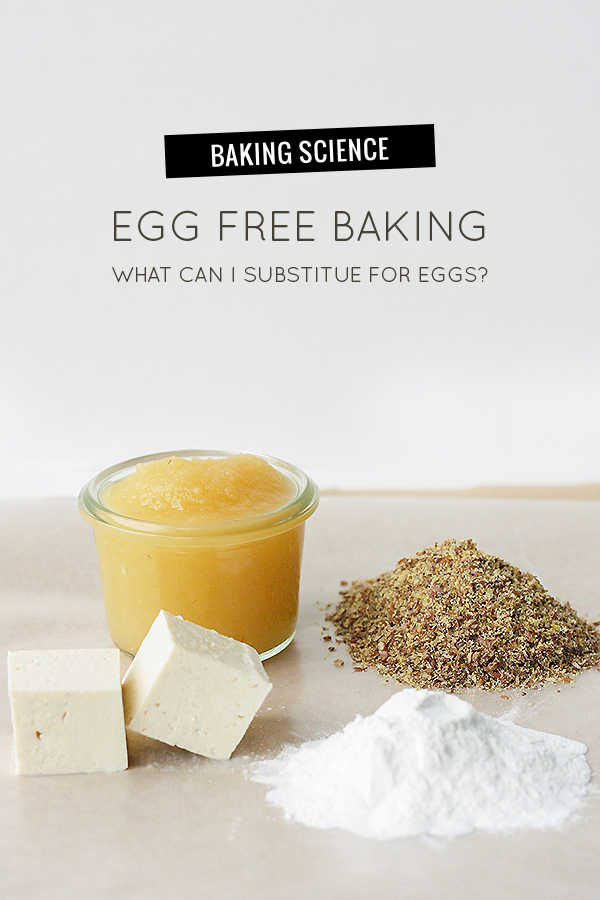
People choose to make egg-free baked goods for a number of reasons varying from allergic reactivity to dietary necessity to moral conscientiousness. Whatever the reason, many people opt to bake eggless for themselves and others. There are a number of options for egg substitution that are available but which one works best, if at all? Here I will cover the best ways to make a cake that is egg-free and delicious.
Eggs have many jobs in the baking process and therefore a valid egg replacer must take on a variety of roles. The roles of eggs in baked goods include:
- Binding and structural scaffolding
- Adding moisture
- Fat provision
- Flavor
- Emulsion
- Browning (through Maillard reactions)
Most viable egg-substitutes aim to fill one or more of the roles that eggs perform.
In order to find the best replacement for eggs in a cake, I tested numerous candidates in a standard cake recipe. What quickly became evident was that it was difficult to come up with a direct substitute and that recipe mediation was necessary to create a tall, light cake.
Determined to find a solution, I started working backwards from an established egg-free recipe and studied the changes that made the recipe work. This eggless recipe included an extra cup of flour and an extra cup of liquid than that found in a standard vanilla cake recipe (which usually contains 1 cup butter, 2 cups sugar, 3 cups flour and 4 eggs). This additional flour-liquid mix acts like a paste that binds the elements in the cake and fills in the structural role that eggs typically take on. An egg replacement was also added to fulfill some of the other egg characteristics.
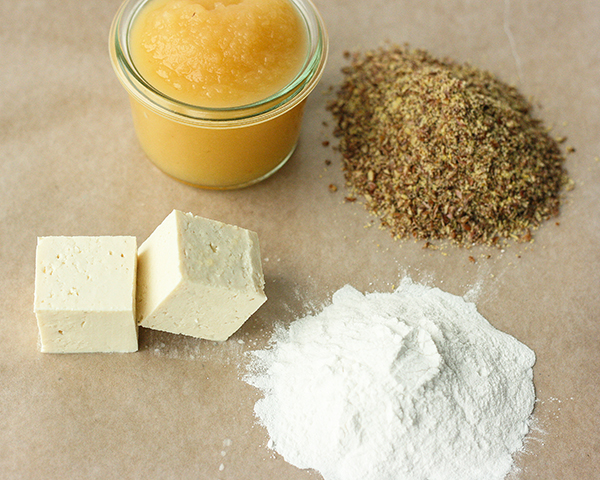
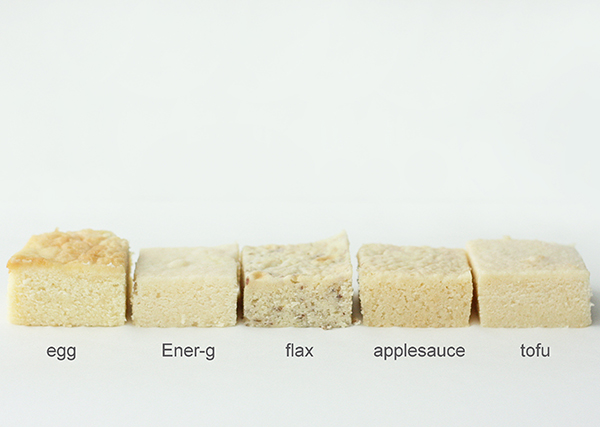
From my initial experiments I chose the four most promising egg fill-ins to test the improved egg-free recipe. I tested each of the experimental ingredients head to head against egg to determine which one performed best. The egg substitutes that I used included applesauce, flaxseed meal, tofu and Ener-G brand Egg Replacer.
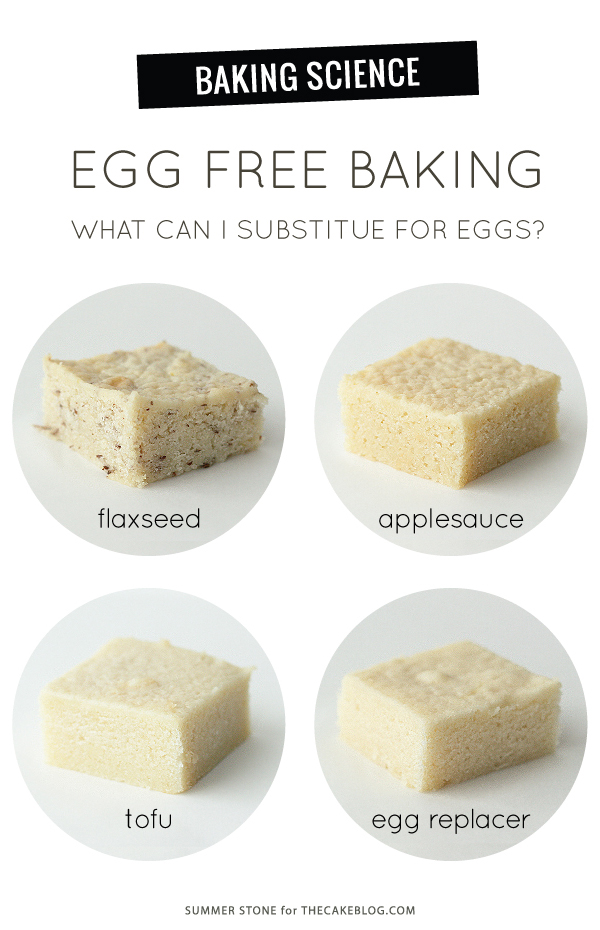
In the end, I found that nothing acts quite like eggs do but there are some products that do much of the work of eggs. None of the substitutes were as good at browning as eggs are because they lack the proteins necessary to carry out Maillard reactions and none could quite mimic the flavor or structure that eggs provide – but some provided nice flavor of their own. Here is a list of egg ingredient substitutes from best to worst and how they fill in for eggs.
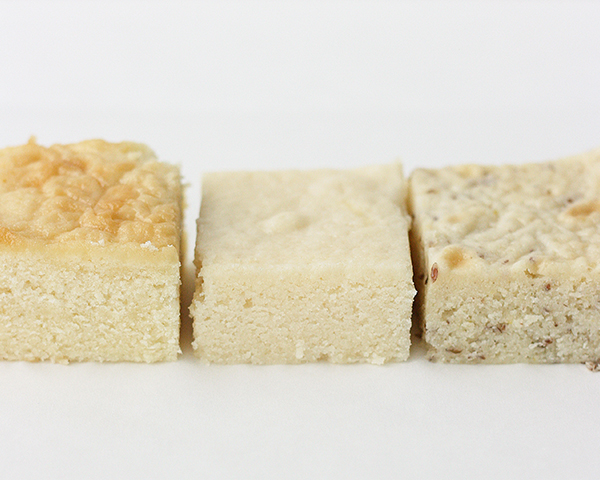
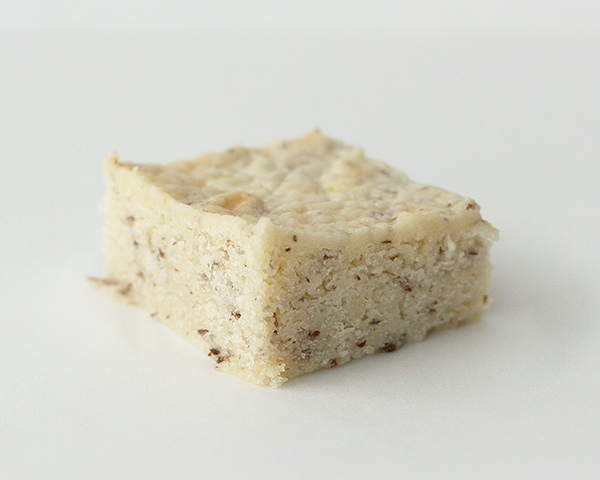
1. Flaxseed Meal (use 1 tablespoon with 3 tablespoons water for each egg): This soluble-fiber rich seed thickens and stabilizes emulsions in a cake batter. The fiber also holds on to the added water for effective moisture. This was my favorite substitute. The flaxseed added a mild, pleasant wheaty flavor while providing for a moderately light cake. The downfall of flaxseed is that is creates brown flecks in a cake. In a chocolate or spice cake this may not be an issue but if you are making a vanilla cake the flaxseed is quite obvious.
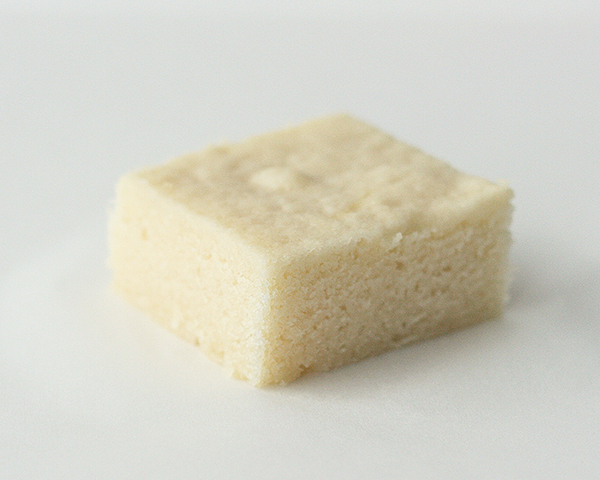
2. Ener-G Egg Replacer (use 1 ½ teaspoons egg-replacer with 2 tablespoons water for each egg): This commercial product combines starches, leavening agents and soluble fibers to act like eggs. The starches add structure, the leavening lift and the soluble fibers stabilize emulsions and hold moisture. This product was a close second to flax meal and had a structure that was most like the egg-containing cake. The trouble with the egg replacer was the paper-like after taste caused by tapioca starch. If used in small amounts in a frosted cake this may be minimally noticeable but the naked cake tasted distinctly of it.
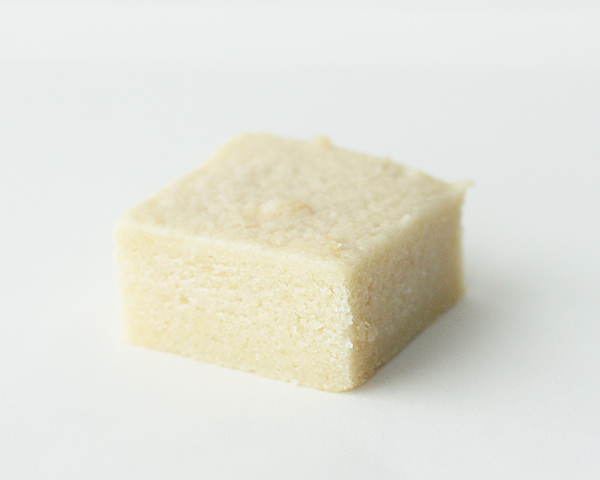
3. Tofu (use ¼ cup of silken tofu for each egg): In theory, the soy protein in tofu could provide some binding properties but in actuality moisture seemed to be the primary contribution. This cake was shorter and denser than the flax or Ener-G cakes and tasted faintly of tofu.
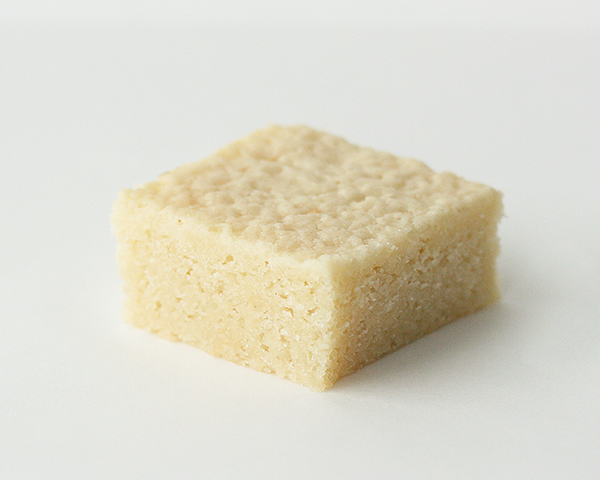
4. Applesauce (use ¼ cup for each egg): This cooked fruit puree is a good source of moisture and contains pectin which stabilizes the cake structure. Unfortunately it also leads to a short, gummy cake that clearly tastes of applesauce. Applesauce flavor is great if that is what you are going for but in a basic vanilla cake it seems out of place.
Egg-free cakes benefit from a mix of additional flour and liquid which helps with binding and structure. In addition to this, egg replacers can help take on some of egg’s jobs creating a nice baked product. Flaxseed meal is a tasty and reasonably effective egg stand-in if you don’t mind some brown flecks in your cake. For a visually pristine cake, Ener-G egg replacer may be a better option but you will sacrifice some flavor. Applesauce and tofu don’t do a great job filling-in for eggs but they aren’t awful if it is all you have on hand. I hope this helps your egg-free baking efforts!
YOU MAY ALSO ENJOY:
Is Butter Really Better?
Baking Temperature Comparison
How to Bake with Alcohol
Can You Overmix a Cake?
Which Flour Is Best?